For decades, games like Solitaire have been the ultimate solo pursuit—a quiet way to pass the time, organize your thoughts, and challenge yourself. But what happens when you take a game traditionally played in solitude and introduce an opponent?
Adding a multiplayer dimension doesn't just change the rules; it completely changes the way your brain engages with the game. Today, we’re exploring how to jump into our multiplayer games, and more importantly, how playing competitively can sharpen your mind and open up entirely new avenues of thinking.
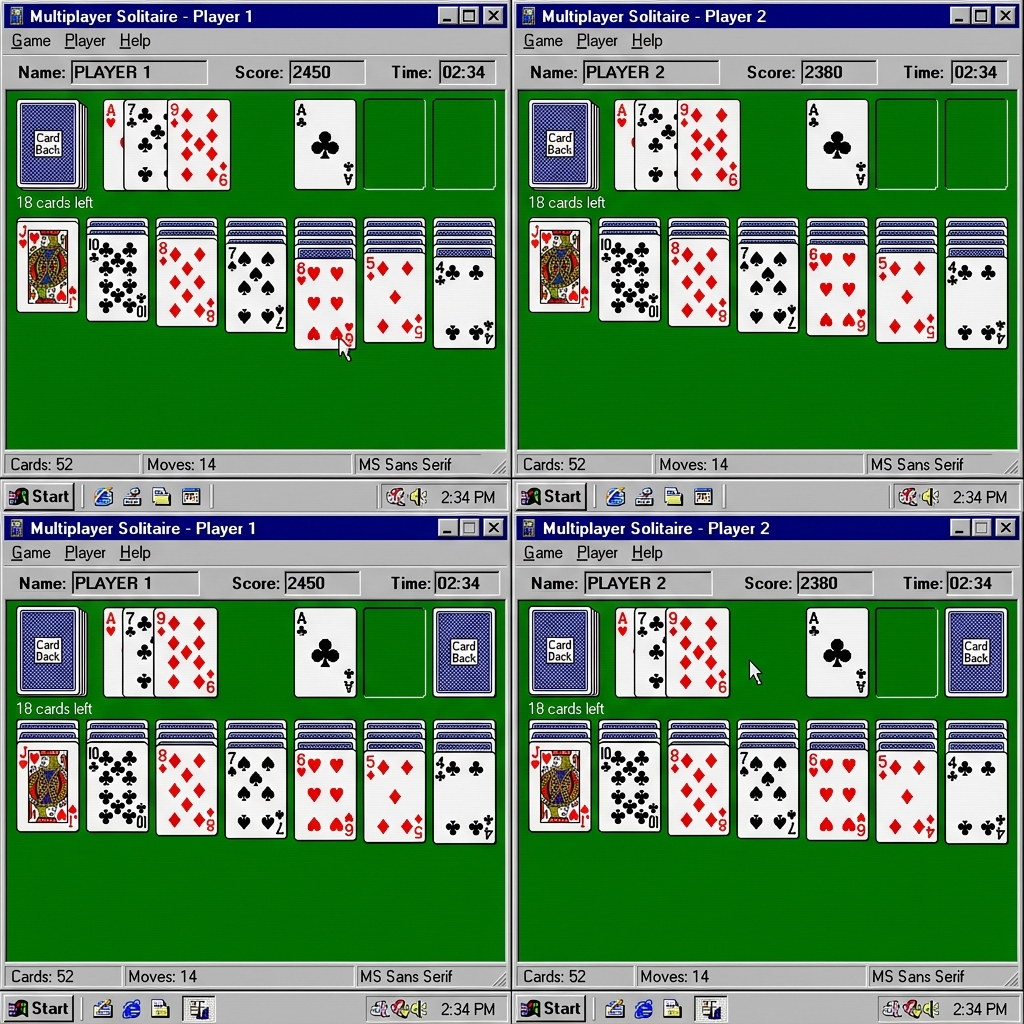
How to Access Multiplayer Mode on Our Site
Getting into a game with friends (or testing your skills against players worldwide) is incredibly simple. We’ve designed our platform so you can switch from solo practice to competitive play in just a few clicks.
- Step 1: Visit our brand new Multiplayer Games Hub or select any game from the main menu (like Klondike, Spider, or FreeCell).
- Step 2: Look for the "Multiplayer" or dial-up icon button, usually located right on the desktop or within the game interface.
- Step 3: You will be entered into our retro matchmaking lobby. You can create a room, invite a friend via MSN Messenger or a link, or wait for an online opponent to connect!
- Step 4: Once connected, you both receive the exact same shuffle. May the fastest player win!
Beyond the Screen: The Psychology of Competition
It’s easy to think of multiplayer gaming simply as a race to the finish line, but there is a profound psychological shift that happens when you know someone else is playing the same board at the same time.
1. The Pressure of the Clock (and the Opponent)
When playing solo, you have the luxury of time. You can stare at the board, undo moves, and ponder your strategy. In multiplayer, the presence of an opponent acts as a ticking clock. This healthy pressure forces your brain into a state of "flow" and heightened focus. It trains you to process information faster and make decisions under stress—a skill that translates directly to real-world scenarios, from meeting deadlines at work to thinking on your feet in conversations.
2. Breaking Out of Tunnel Vision
We all have our "go-to" strategies. When playing alone, it’s easy to fall into a rut, repeating the same patterns and moves because they feel safe. Competitive play shatters this tunnel vision. When you watch an opponent pull ahead on the exact same board, it’s a sudden realization that there was a better way. This forces you to re-evaluate your habits. It teaches adaptability. You begin to look at the board not just for the obvious moves, but for the most efficient moves.
3. Unlocking New Avenues of Thinking
Multiplayer gaming transforms a game of logic into a game of resource management and risk assessment.
- Do I play this card now and risk exposing a card I don't need, or do I wait?
- My opponent just scored rapidly; they must have uncovered a key column. How do I pivot my strategy to catch up?
This dynamic environment fosters lateral thinking. You start anticipating scenarios multiple steps ahead, not just to solve the puzzle, but to solve it faster than the human mind competing against you. It trains cognitive flexibility—the ability to seamlessly switch between different concepts or to think about multiple concepts simultaneously.
The Ultimate Brain Workout
Competitive multiplayer isn't just about winning; it’s about pushing the boundaries of how you approach problems. Every loss is a lesson in efficiency, and every win is a testament to strategic thinking under pressure.
Ready to test your limits? Head over to our Multiplayer Hub, pick your game, and see how your brain rises to the challenge.
🂱 Ready to Test Your Card Skills?
Experience authentic Windows 95 card gaming directly in your browser with zero downloads, zero ads, and 100% free offline PWA play. Try our classic Klondike Solitaire, master the open cells in FreeCell Solitaire, or challenge friends in Multiplayer Solitaire with MSN Chat!