Welcome to the official FAQ page on the history and mechanics of digital solitaire games. Below are the most common questions and detailed historical facts about the classic digital versions of Solitaire (Klondike) and FreeCell.
Who invented digital solitaire?
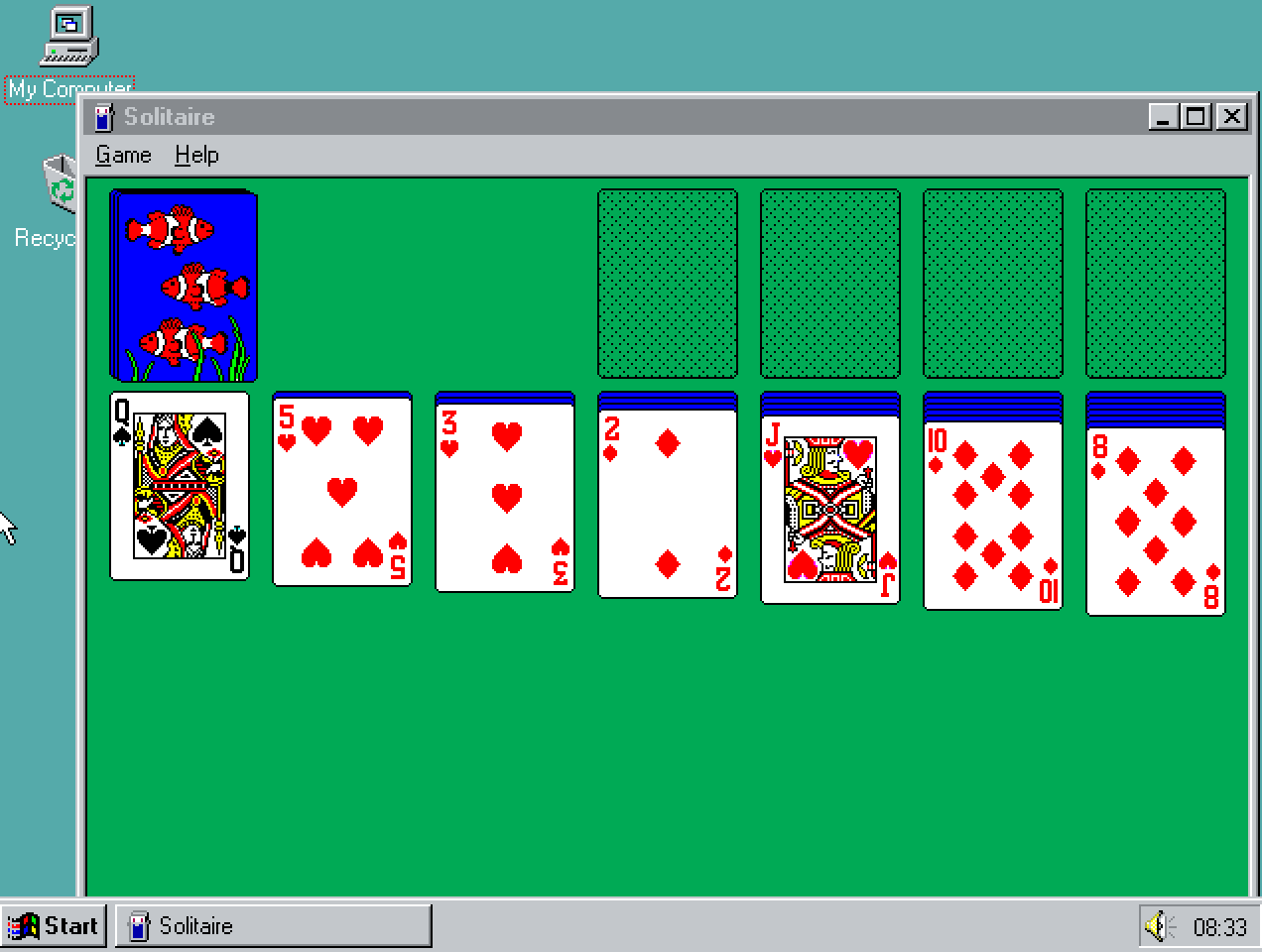
The most famous version of digital solitaire—Microsoft Solitaire—was created in the summer of 1988 by a computer science intern named Wes Cherry. He programmed the game out of sheer boredom for Windows 2.1. The original pixel-art card deck was designed by Susan Kare, a pioneer in early graphic user interfaces. Despite creating one of the most played computer games of all time, Wes Cherry never received any royalties for his work. You can play a modern, ad-free recreation of this classic Klondike Solitaire online here.
Who invented digital FreeCell?
While Wes Cherry created the standard Windows Solitaire, digital FreeCell is actually much older! It was invented in 1978 by Paul Alfille, a medical student who programmed the very first digital version for the PLATO educational computer system at the University of Illinois. A decade later, a developer named Jim Horne brought FreeCell to Microsoft DOS, and it was eventually bundled into Windows 95, turning it into a massive global hit. Today, you can play our high-fidelity recreation of FreeCell online in your browser.
Why was Solitaire included in early Windows operating systems?
Officially, Microsoft included Solitaire in Windows 3.0 to help computer users get comfortable with a brand-new hardware device: the computer mouse. The game cleverly trained people on how to use "drag-and-drop" mechanics without feeling like a boring tutorial. Unofficially, it just happened to be a highly addictive way to pass the time! Read our guide on how to play solitaire rules to learn more about the basic deck setup.
Are all FreeCell games winnable?
Unlike standard Klondike Solitaire, FreeCell is considered an "open" game where nearly every hand can be solved with perfect play. When FreeCell was released on Windows 95, it included 32,000 numbered deals. In the mid-1990s, a crowdsourced internet project attempted to beat every single one—and they successfully solved all of them except for one impossible hand: Deal #11982. Learn more about the mathematics of this deal in our FreeCell Strategy Guide.